
You’ll never know it all, and that’s the point
Learning has always been one of the four pillars of REAL. Leadership, but in a world that seems to be changing faster than ever, what does it really mean to keep learning as a leader?
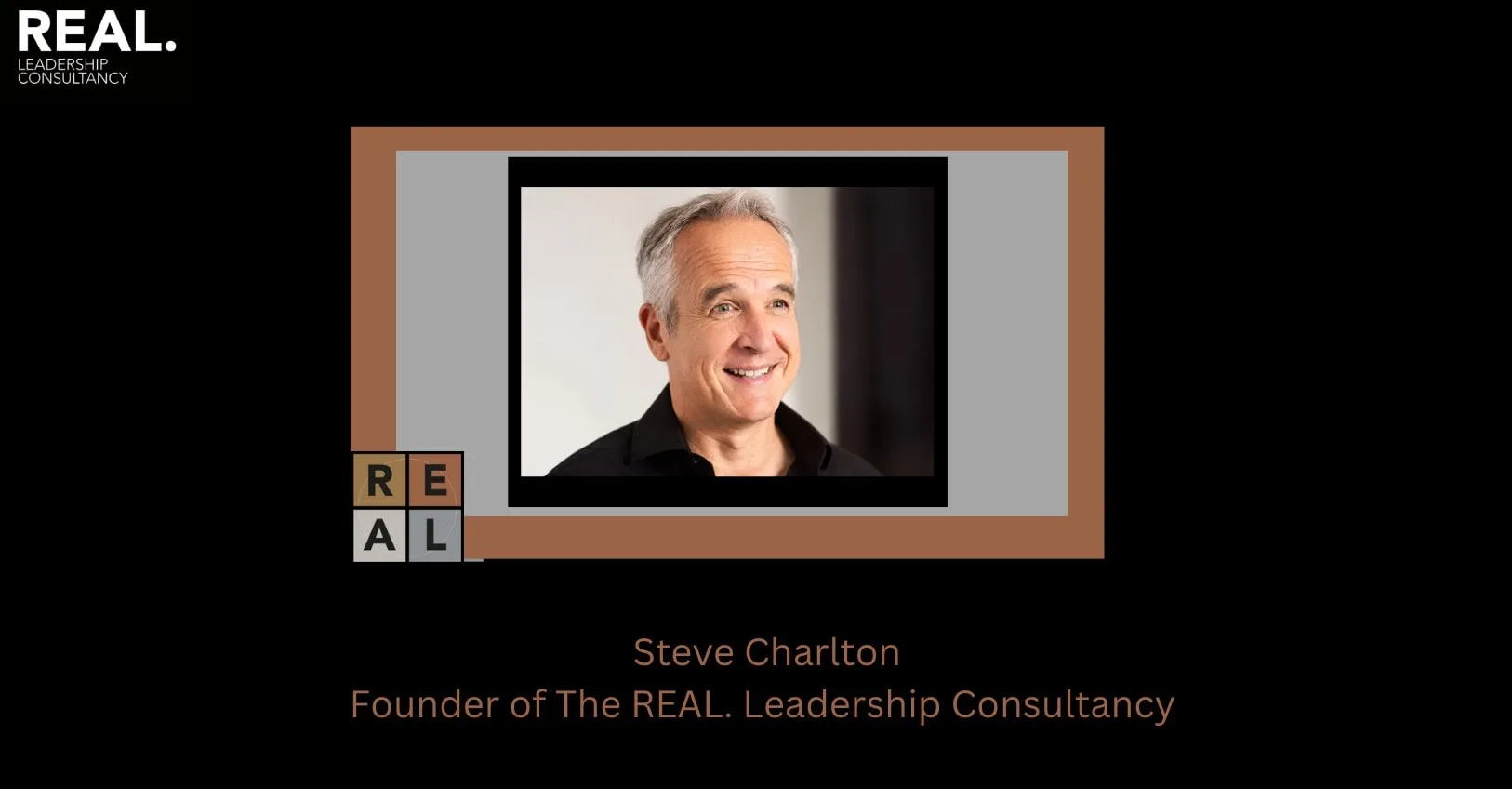
We asked Steve Charlton, Founder of REAL. Leadership, to revisit some of the ideas from his book Get REAL. and share why he believes leaders should never expect to have all the answers.
From thinking like a football manager or orchestra conductor to surrounding yourself with people who challenge you, Steve explores why curiosity, listening and having the confidence to say “I don’t know” are becoming increasingly important parts of leadership
When I wrote my first book, Get REAL., I described Learning as perhaps the most important of the four pillars of REAL. Leadership and I think I believe that even more strongly now.
Leadership has always involved uncertainty and that’s nothing new. But the pace of change feels different today, with technology moving quickly, AI changing how work gets done, people’s expectations shifting and many of the assumptions we’ve built our careers on are being challenged.
Experience still matters enormously, but experience shouldn’t become certainty or an excuse to stop learning. One of the most dangerous things a leader can think is, “Well, it worked before, so it will work again.” Sometimes it will, but sometimes it really won’t. Learning isn’t something you do on the way to becoming a leader, it is part of being one.
The confidence to say “I don’t know”
For a long time, we’ve had this slightly odd idea that the further up an organisation you go, the more answers you’re supposed to have. I’ve never believed that, some of the best leaders I’ve worked with are perfectly comfortable saying, “I don’t know. What do you think?” That takes humility, but I think it also takes quite a lot of confidence.
In Get REAL., I wrote about the importance of learning from everyone, anywhere. That could be a mentor, a coach or another CEO, but it could just as easily be somebody who joined your organisation six weeks ago. One of my principles of REAL. Leadership is: “You don’t know it all, listen and learn from everyone, anywhere, all the time.”
Your job title doesn’t suddenly make you the most knowledgeable person in the room, nor should it. What matters is whether you’ve created an environment where the people who know more than you are comfortable telling you.
Think like a football manager, not the star player
I often think leadership is a bit like being a football manager. A great manager doesn’t need to be the best striker, goalkeeper, defender or midfielder. The players on the pitch will almost certainly be better at those things than the person standing on the touchline. It’s the same with an orchestra conductor, they don’t need to be the best violinist.
Their job is different. They need to understand the talent around them, get the right people into the right roles and bring all those individual strengths together around a shared goal. As organisations become more specialised and technology keeps evolving, it becomes increasingly unrealistic to expect the person at the top to understand everything better than everyone else.
You don’t need to be the expert in everything, you need to be good at bringing the experts together and, just as importantly, willing to learn from them.
Surround yourself with people who challenge you
It’s very easy to surround yourself with people who think like you, agree with you and have broadly the same experience. It’s comfortable, certainly, but where’s the learning in that?
I’ve always believed leaders should recruit people who are better than them and who are prepared to challenge them. In sport if you want to improve, you play against people who are as good as you, or better. Why should leadership be any different?
The people who challenge your thinking can teach you an enormous amount, including things about yourself that you might not particularly want to hear. That’s where ego has to take a back seat. Someone else’s expertise isn’t a threat to your leadership, it should make you a better leader.
Listening is part of learning
Then there’s listening, and I mean actually listening, not sitting quietly while you prepare your answer. I’ve written before about becoming a “Hear-a-holic”. For me, that means actively looking for different perspectives and creating enough space for people to use their voice, particularly the people we might otherwise overlook.
Every leader has blind spots, I certainly do. The problem comes when we stop being curious enough to find out what they are. Ask questions, invite challenge, talk to people outside your usual circle and listen to the person who sees the organisation completely differently from you. And be prepared to change your mind occasionally, that’s part of learning too.
Leadership is never finished
I wrote in the book that it would never really be finished. There would always be something else I wanted to add because I was still learning. I feel exactly the same about leadership. There isn’t a point where any of us can sit back and think, “Right, I’ve cracked that.”
We learn from things that go well and more from the things we get badly wrong. We learn from our teams, our peers and sometimes from the person we least expected to teach us anything. Leadership is constantly changing, growing and evolving, and that means we have to do the same.
The world isn’t going to stop changing while we catch up. So perhaps one of the most useful things any leader can learn to say is: “I don’t know yet. But I’m willing to learn.”
#leadershipskills #lessonsinleadership #leaderchat #leaders #leadershipdevelopment #leadership