
Authentic Communication In A World of AI
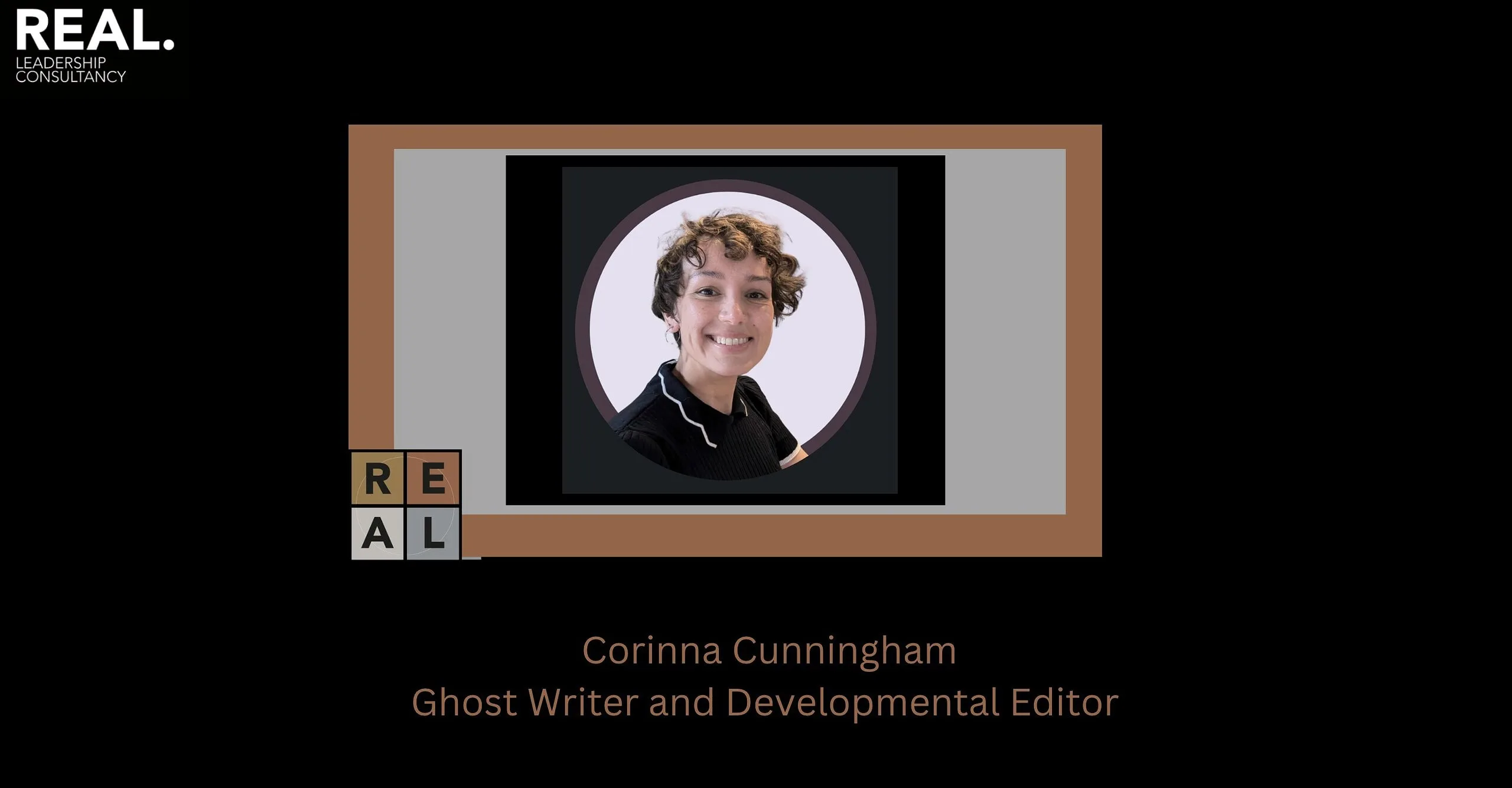
Corinna Cunningham is a ghostwriter and developmental editor who helps leaders, founders and experts turn their ideas into compelling thought leadership. Working as a ghostwriter, she has seen first-hand how trust is built, and how quickly it can be lost. In this article, Corinna explores what authentic communication looks like in an age of AI-generated content, misinformation and growing scepticism. She argues that while technology continues to transform how we create and share ideas, trust remains deeply human, and that becoming an author may be one of the most powerful ways leaders can demonstrate authenticity, credibility and conviction in an increasingly uncertain world.
This year, the World Economic Forum ranked misinformation and disinformation as one of the top ten global risks, with it being only the second most severe short-term global risk after geoeconomic confrontation.
Scary.
And no matter how much we wish that weren’t true, we only have to go online to see evidence for ourselves.
Growth in false, misleading content driven by the explosion of generative AI has made it easier for deepfakes and mass-produced disinformation, resulting in eroding trust in anything we see or hear on the internet.
Recent studies on AI authorship found that readers rate AI-generated content as less trustworthy and less empathetic than human-written content. And, interestingly enough, any disclosure of AI involvement reduced perceptions of the author, not just the content itself.
In other words, AI has eroded trust, resulting in lower engagement and perceived credibility.
Not great if you’re trying to build something based on the authenticity and credibility of your work.
Now, we can’t deny that the opportunities for AI are great, and that the positive potential of AI has already been seen in ways you can Google for yourself.
But when people can’t trust the content they read or hear, by association, it’s harder for them to trust the authors named in the byline, the organisations those authors write for, the communities those organisations represent … and so it ripples outward like an aftershock of an earthquake.
So what’s the solution? How can you communicate authentically in a world where authenticity is questioned at every step?
Become an author
The Ultimate Thought Leadership Asset
I know you’ve probably heard it all before: that you need to write a book if you want to be taken seriously. Books help to create trust. It makes you credible. You can become an authority in your field.
But that’s not marketing spin.
And as a ghostwriter and editor, yes I am probably the most biased of them all.
However, you only have to ask leaders who have become authors to confirm the benefits of publishing one. To check your own bookshelves to find the names of authors you’ve never met, but trust implicitly thanks to their written words.
So whether you’ve thought about becoming an author or not, you can’t deny that holding a book in your hands creates a connection with its author unrivalled by anything a scroll or a click can do. Maybe even more so in the current climate.
For one thing, the wonderful thing about books, in the age of digital deepfakes, is that books cannot be manipulated retrospectively. A book is timestamped in its publication. It’s a record of who you are, and what you believe at a fixed point in time. You cannot reverse engineer your beliefs to fit the current trends, or ask AI to generate a new version in seconds just so you can align with a viral industry conversation. Your ideas are now permanently recorded as a statement of conviction and self-belief that demonstrates stability. And there’s safety in stability.
The process of writing a book also reveals commitment to your cause. I have worked with several authors as their ghostwriter and editor, and I can attest to the sustained effort and organised energy required over months, or even years to take those ideas and get them on the page in a way that makes sense. Even if I’m the one ghostwriting the book, it’s not me being the one splashed all over the pages, it’s the author. That’s commitment, vulnerability and loyalty that can’t be faked.
Having a published book means it has passed through several rounds of editing, checks, and proofreading by professionals who have years of experience. It will be reviewed, talked about and picked apart by critics and readers. Therefore, any author willing to have their ideas scrutinised and examined like that demonstrates a kind of openness that you can’t help but trust.
And finally, the most important point to consider: books create relationships. Any reader who finishes your book has spent hours in the pages of your thinking. When there is repeated, slow exposure over time built on sustained, undivided attention it mimics how trust forms between people in real life. Short of being in the room with your reader, your book is the next best thing to building a relationship with them.
But Wait…
Anyone with access to AI can now use AI to write their book. Doesn’t that defeat the trust a book builds?
Well, have you ever read a book written by AI?
I have and let me tell you, it shows.
Yes, of course people will use AI to draft and start their book, and I can’t stop them. But to get one to the high standards required of thought leaders and experts?
You need the human touch. And ideally, when it comes to writing a book for authenticity, it needs to be there from the start.
A Final Thought
At this year’s Independent Publishers Guild’s Spring Conference BBC’s culture and media editor Katie Razzall gave a keynote stating that in the age of information overload and AI-generated content, “books remain the gold standard of trustworthiness.” (For the reasons I shared with you earlier)
She stated that while having information is important, what’s clearly becoming just as important is who you get it from, and increasingly we are seeing this in action as people shift their trust away from institutions and towards individuals.
A book is hard proof of who you are and what you stand for: an asset, unmanipulated by AI, in which your authenticity, credibility, and trustworthiness is preserved forever in 200 pages of ink and paper.
As a leader who cares about authenticity, becoming an author may not be such a bad idea.
#leadershipskills #lessonsinleadership #leaderchat #leaders #leadershipdevelopment #leadership